 ru
ru en
enМалотоннажные заводы
по производству СПГ
Одним из перспективных направлений работ Группы компаний «МКС» является реализация проектов по строительству малотоннажных заводов по производству сжиженного природного газа. Главными предпосылками для развития подобных проектов в России является наличие большого количества газовых месторождений в шаговой доступности, которые не представляют интереса для промышленной добычи, но могут обеспечить интересы локальных потребителей. Низкая стоимость газа на таких месторождениях позволяет получить положительную экономику на ближайших инфраструктурных проектах.
ТЕХНОЛОГИИ,
МЕНЯЮЩИЕ
МИР
При реализации проектов по строительству малотоннажных заводов по производству СПГ Группа компаний «МКС» выполняет все работы «под ключ»: от инженерных изысканий, проектирования, поставки оборудования до строительства, монтажа, пусконаладки и передачи объекта в эксплуатацию. Проект реализуется по технологии блочно-модульного строительства. Объект соответствует всем требованиям отрасли, имеет высокую степень автоматизации и отличается простой и эффективной схемой работы.
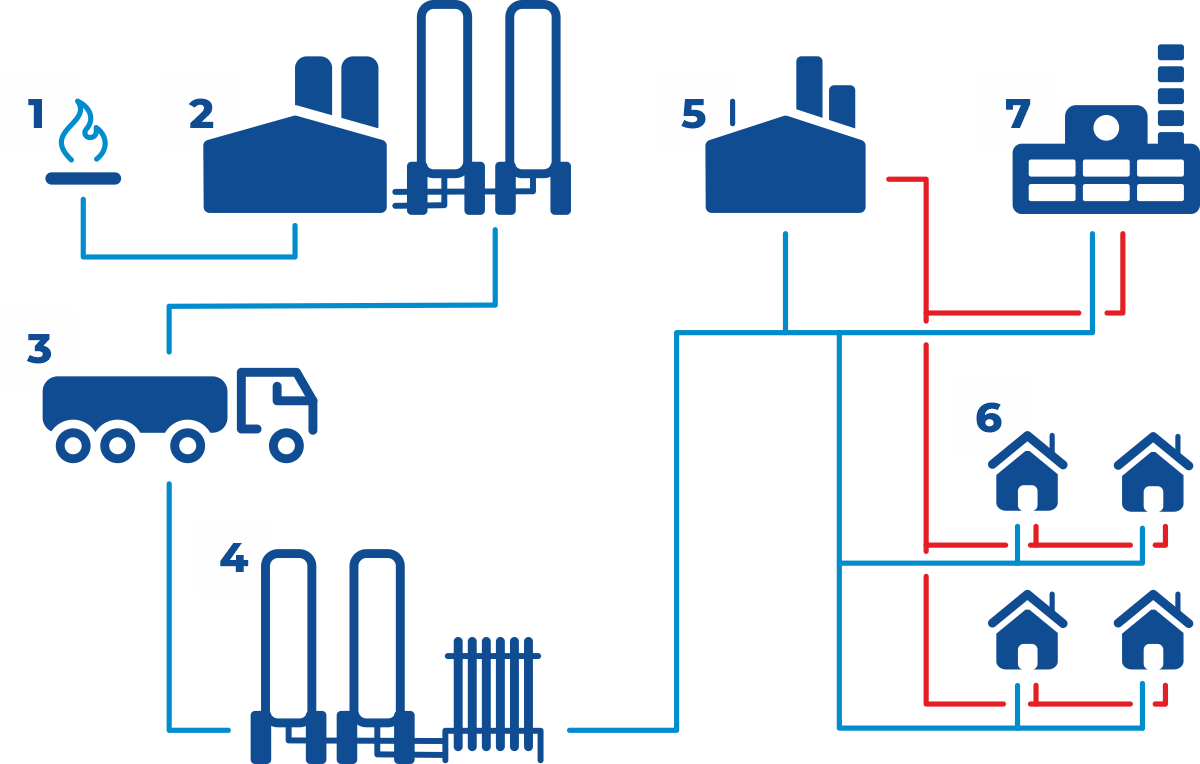
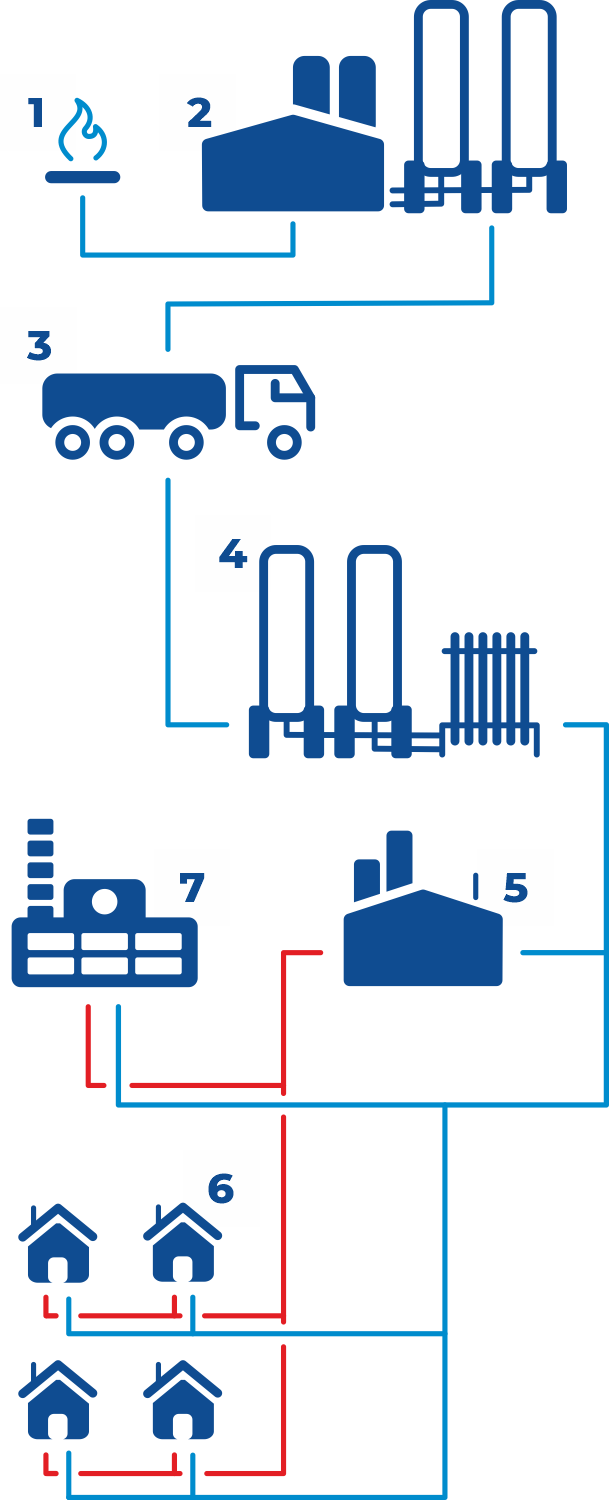
1
Источник природного газа
2
Мини-завод по сжижению природного газа
3
Транспортировка СПГ
4
Парк хранения и регазификации СПГ
5
ТЭЦ
6
Жилой поселок
7
Промышленный объект
- Малотоннажный завод СПГ устанавливается в непосредственной близости от месторождения газа
- Полученный СПГ транспортируется от завода до парка хранения и регазификации
- Опционально предлагается установить собственную газопоршневую электростанцию для производства дешевой электроэнергии для собственных нужно, а также бытовых и производственных нужд третьих лиц, расположенных поблизости.
Общая схема производства СПГ (вариант):
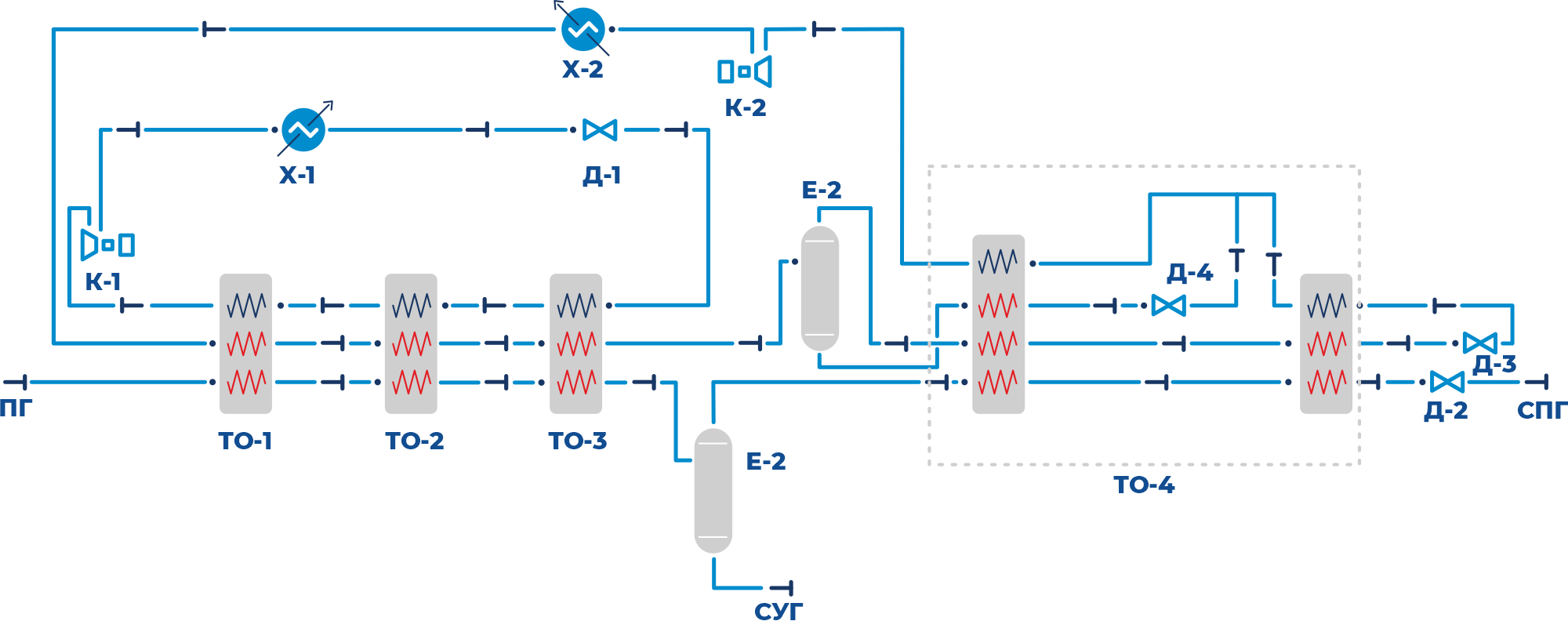
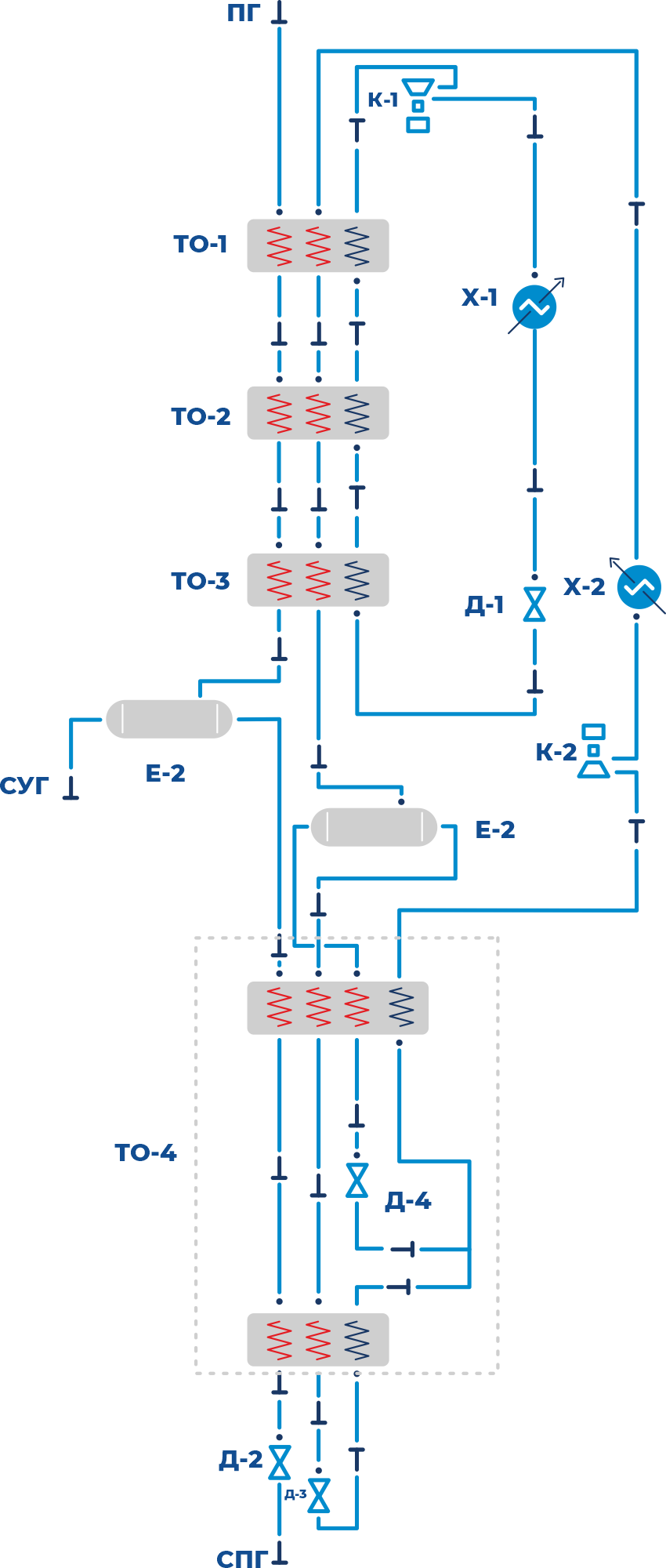
- Сырьевой газ (ПГ), поступающих с блока очистки, охлаждается в холодильниках. Пропан используется при различных уровнях давления в каждом из холодильников (ТО-1..ТО-3), позволяя охладить сырьевой газ до температуры около – 35 С.
- Предварительно охлажденный природных газ и отделенных в сепараторе (Е-1) от тяжелых углеводородов, подается в главный криогенный теплообменник (ТО-4), где происходит его дальнейшее охлаждение, сжижение и переохлаждение в теплой и холодной секции теплообменника, после чего газ попадает в емкость мгновенного испарения.
Преимущества малотоннажного производства СПГ:
Малотоннажные проекты по производству СПГ повышают доступность газа для регионов, обеспечивают большую гибкость и скорость за счет доступа к нескольким источникам сырья и отсутствия необходимости включать в один проект добычу и переработку.
Малотоннажное предприятие может быть реализовано за 6-12 месяцев. Это значительно меньше сроков по реализации крупного проекта.
Небольшой объем газа, требуемый для сжижения, позволяет разместить производство практически в любом месте. Для строительства такого промышленного объекта не требуется обязательного доступа к глубоководным морским портам.
В отличие от крупнотоннажного предприятия, сегмент малотоннажного СПГ не имеет технологической зависимости. Это позволяет оптимизировать капитальные затраты и минимизировать санкционные риски.
Малотоннажный СПГ используется в качестве газомоторного топлива в горнодобывающем производстве, в проектах автономной газификации, распределенной тепловой и электрогенерации
Достаточно высокое качество для производства в малых объемах, низкие в абсолютных значениях стартовые инвестиции делают эти проекты привлекательными как для заказчиков, так и для инвесторов.
Перспективы развития малотоннажных проектов СПГ
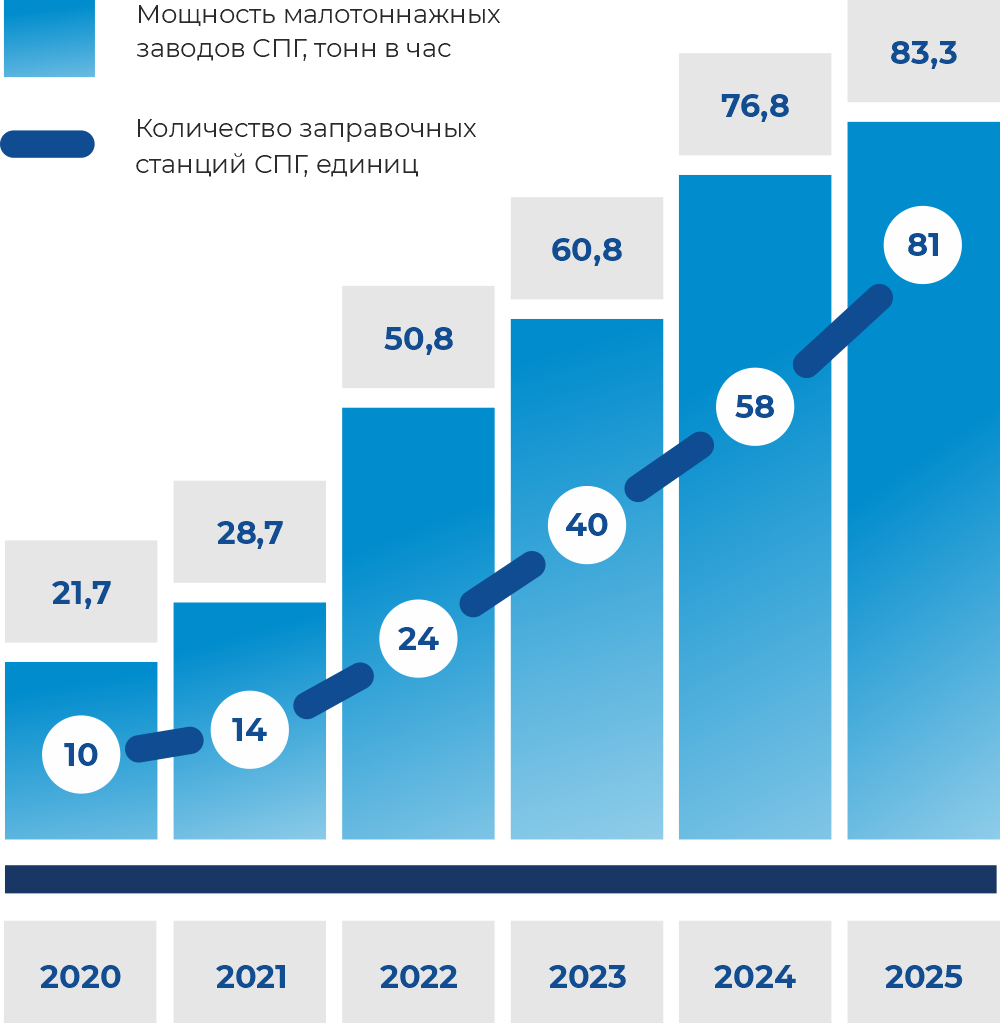
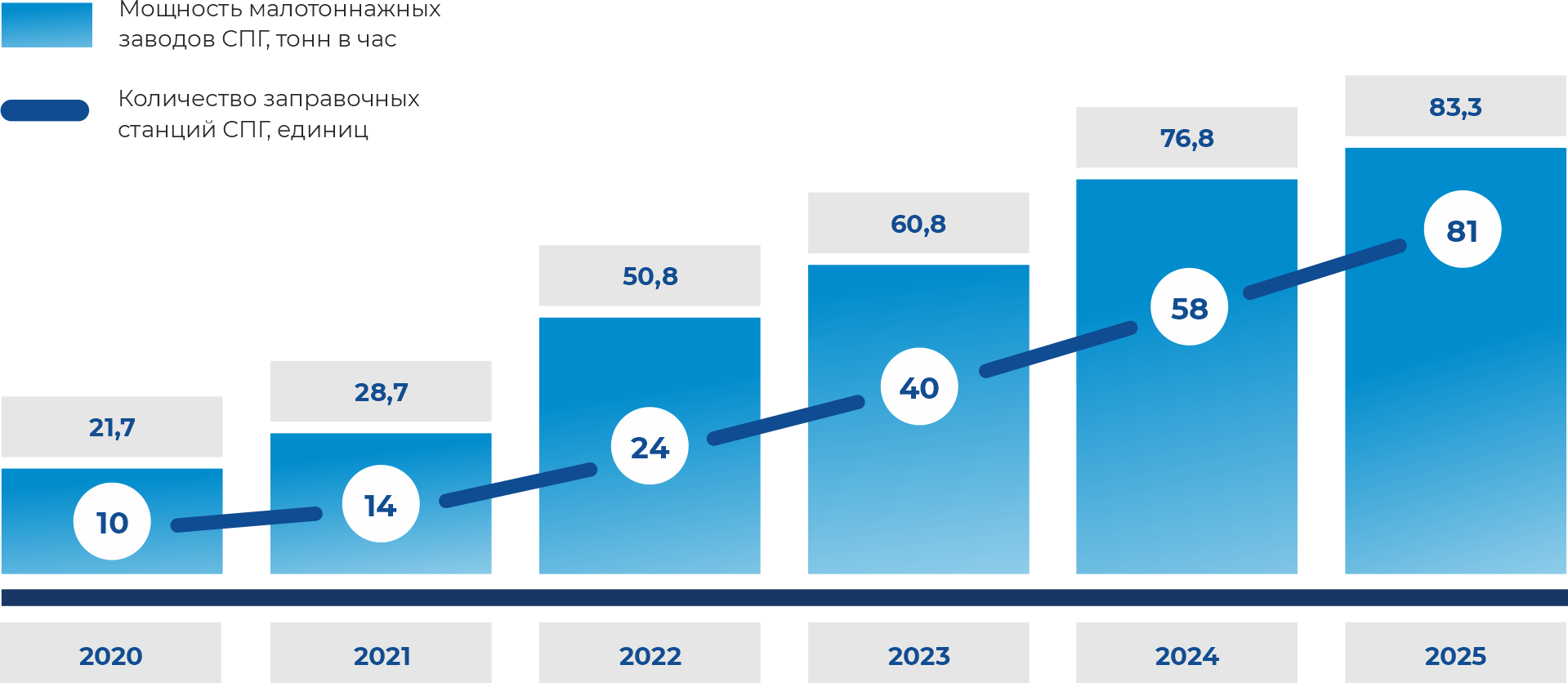
Сегодня в России работает 11 малотоннажных заводов по производству сжиженного природного газа совокупной мощностью около 100 тысяч тонн. Мощность малых заводов по производству СПГ планируется увеличить в 4 раза к 2025 году до более 400 тысяч тонн в год. Это следует из Дорожной карты по развитию рынка малотоннажного СПГ, которая утверждена Правительством РФ. Также планируется расширять использование СПГ как топлива для транспорта. В первую очередь, для сельскохозяйственной и дорожно-строительной техники, а также автомобильного, железнодорожного и водного транспорта.План развития малотоннажного производства СПГ и газозаправочной инфраструктуры на СПГ
Основные преимущества данных проектов в исполнении МКС:
Разработка и реализация проектов компактных мобильных малотоннажных заводов производится собственными силами
Имеются технологии, собственное производство, инжиниринг, сервис
Сроки реализации проектов компактных мобильных малотоннажных заводов – 6-12 месяцев
СПГ является оптимальным видом топлива для удаленных и изолированных потребителей
Получение прибыли за счет продажи СПГ и электроэнергии с собственных газовых электростанций
Себестоимость СПГ 6-7 руб. за 1 нм3
СПГ можно продавать как газомоторное топливо по 18-22 руб. за 1 нм3
IRR проектов более 30%